


The artist’s surreal and immersive installation, in collaboration with Capital One and The Cultivist, transformed an old movie theater into a miniature recreation of Old Hollywood

Each December, Miami Beach becomes a magnetic field of culture during Art Week, anchored by the American edition of the leading fair, Art Basel and a host of satellite events. This year, one of the most anticipated pop-up experiences was by artist and filmmaker Alex Prager, who unveiled the Mirage Factory in collaboration with Capital One and The Cultivist. A surreal installation in an old movie theater, the pop-up transported visitors to Old Hollywood. Part artwork, part theater and part social happening, the Mirage Factory continued Prager’s long fascination with the cinematic uncanny—her trademark tension between artifice and reality—now extended into an immersive experience.

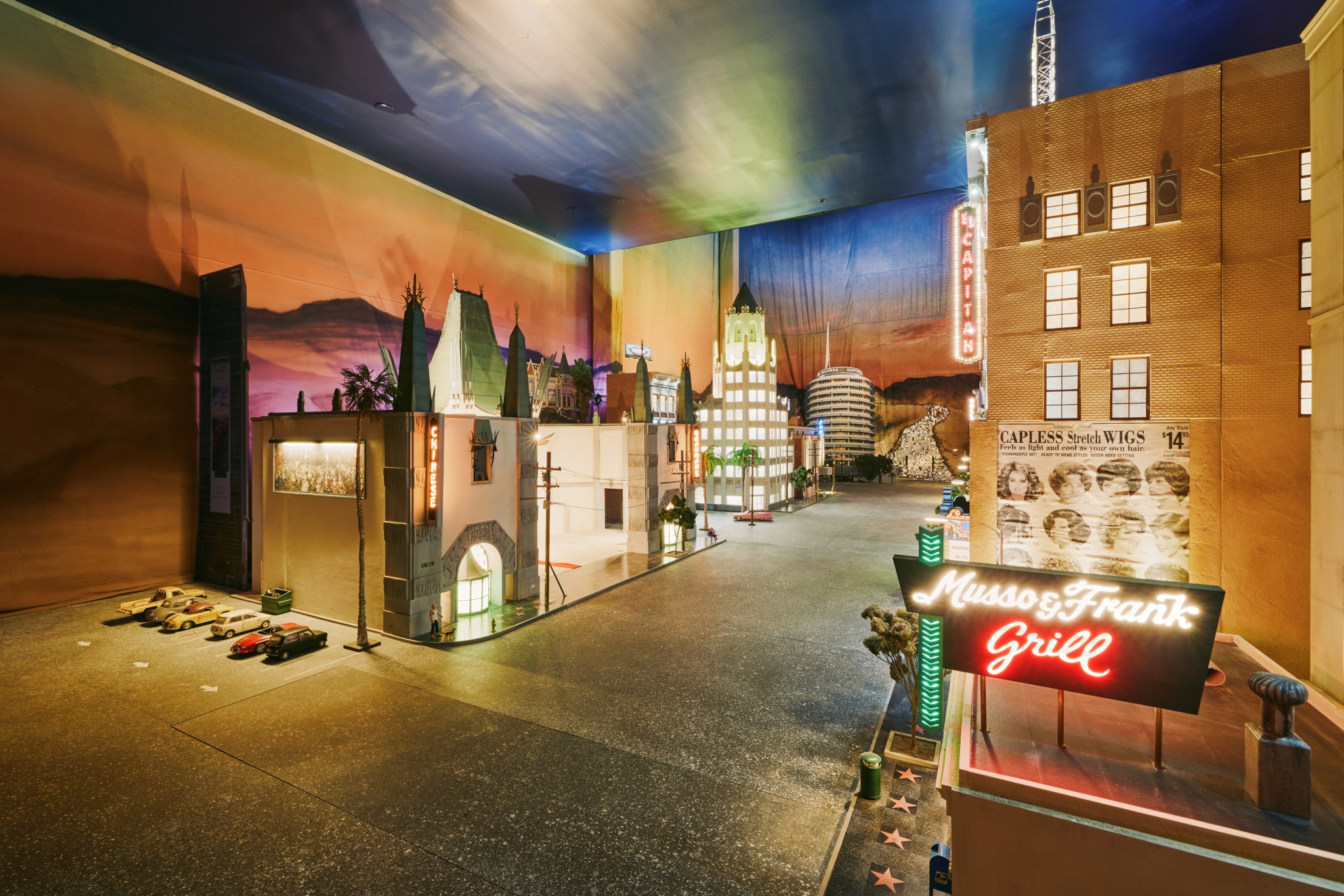
“I was born in Los Angeles, raised there and I am still living and working there, so it’s hard to define the city,” Prager told us as we sat surrounded by handmade models of LA’s iconic buildings, like the TCL Chinese Theatre. “Los Angeles is a city that should never have been. It was made by dreamers and unorthodox thinkers who created it out of dust. That’s what I wanted to capture.” While a lofty task to convey the allure and aura of LA, Prager nailed the assignment. Made possible through an annual collaboration between Capital One and the international arts club The Cultivist, the project was also a rare opportunity to step inside the exaggerated, hyper-real worlds that have made Prager an international force in photography and film.

“I immediately loved the idea of a movie theater because it’s a reminder of the current state of Hollywood and the film industry, as well as the madness and corruption that defined it,” said Prager. “Movie theaters are like thresholds. You’re committing to a magical journey with strangers when you cross that threshold.” Designed as a living work of art, from the moment guests entered Mirage Factory, the theater unfolded as a journey through Los Angeles’s past and present, beginning with an orange grove rendered with Prager’s signature blend of the familiar and the uncanny.

As visitors moved deeper into the installation, the atmosphere shifted to the streets of Hollywood. Created with leading miniature maker and longtime collaborator of Prager’s, Christopher Warren of the family-owned company Blind Beagle, the models were full of recognizable imagery, like the iconic Arby’s sign on Sunset Boulevard that was sadly recently removed. Nods to earthquakes and droughts underscored the lived experiences of the city. Lights flickered. A breeze hummed and a soundscape of LA unfolded in the background. Every detail—costume, prop, lighting—reinforced the sensation that the viewer had slipped sideways into a studio backlot from another era.

The final space was bathed in green to resemble LA’s famous Griffith Park, complete with a view of the observatory. Quirky details like a pool with the legs of a woman in red slippers filled the space. This room also led to a gift shop where visitors could purchase limited-edition merchandise designed by Prager, including a lifelike orange candle, with proceeds supporting Heal the Bay, a nonprofit dedicated to cleaning the coasts and watersheds in Greater Los Angeles.

The installation was open to the public during Art Week, and Capital One cardholders and Cultivist VIPs had access to additional programming, including a special performance by the legendary Diana Ross, who serenaded the audience with hits like “I’m Coming Out,” “Baby Love” and “You Can’t Hurry Love.” Additionally, award-winning chef Dave Beran—known for the precisely choreographed dining experiences at his Michelin-starred restaurants Pasjoli and Dialogue—designed a dinner served inside the installation. Beran’s menus, celebrated for their narrative structure and meticulous mise-en-scène, offered a fitting parallel to Prager’s world-building. Later in the week, guests returned for “Martinis at The Mirage”, a cocktail-driven evening accompanied by live music. Additional performances by musicians including Leon Bridges took place throughout the week at The Shelborne By Proper, as well as daily happy hours and synchronized swimming performances in the chic hotel’s pool that Prager transformed with glittering mirrors and a giant, realistic orange.
The Mirage Factory offered a rare kind of escapism: a glimpse of Hollywood myth remixed through Prager’s surreal lens, shimmering with nostalgia, artifice and the strange seduction of the dream factory itself.
CONTEXT: incontent
This placeholder is removed when the ad slot is configured.
