
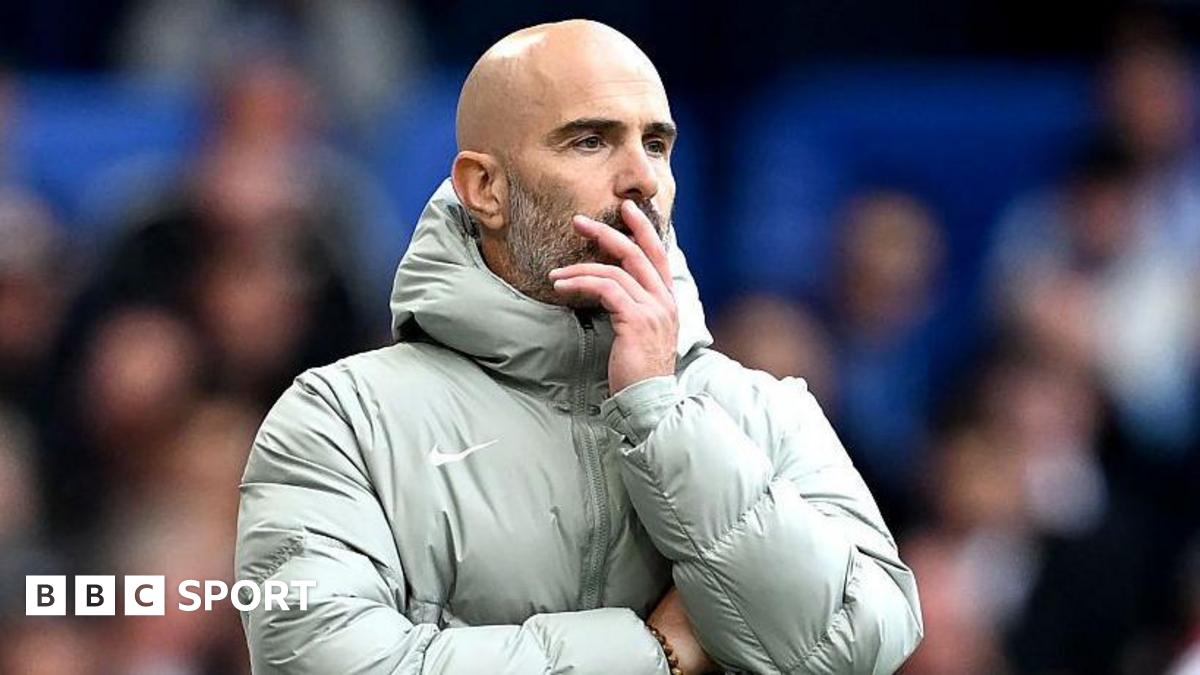
After Maresca’s side beat Cardiff City in the Carabao Cup in December, supporters chanted his name.
They hadn’t done so as openly since appearing to be mounting an unlikely title challenge last season, when fans also sang ‘We’ve got our Chelsea back’.
But a disappointing run followed, and supporters turned on Maresca both inside the stadium and on social media.
Part of the criticism was Maresca seemed a distant, project-focused manager, as fans struggled to move on from the very different and successful era under Roman Abramovich’s stewardship.
Though he won the Club World Cup, many supporters disliked his communication style and slow, patient football – and influential fans said chants in support of Maresca were largely a protest against the club’s BlueCo ownership.
That is why Chelsea continued efforts to convince supporters Maresca was the right manager and that the ownership’s ultra long-term approach would eventually bring sustained success.
Key figures at the club admired Maresca’s style of play, insisting it improved players, and that any successor would adopt a similar approach. Further progress was made with team spirit after Mauricio Pochettino had laid the foundations.
Regular starters broadly liked Maresca, but – perhaps inevitably – he was less popular on the fringes of the squad.
There were complaints after one-off tactical missteps. One player questioned their man-to-man marking approach in a heavy defeat at Manchester City in January 2025, and Maresca said he needed to coach better after a home loss to Brighton, when Chelsea had a player sent off.
The club’s only real concern in his first season was his sometimes clumsy news conferences, attributed – as an Italian who speaks Spanish at home – to English being his third language.
In their view, he had played down Chelsea’s chances of Champions League qualification too much – alienating ambitious fans. There was also a curious moment at the Club World Cup when he awkwardly refused to praise Mexican set-piece coach Bernardo Cueva to a compatriot in the media, despite previously praising coaches closer to him.
Maresca also adopted a cold, aggressive tone towards Chelsea’s so-called ‘bomb squad’.
Initially, it proved useful – leaving unwanted players in no doubt they had to leave. But when players such as Raheem Sterling and Axel Disasi failed to secure transfers, the approach became counterproductive, as the Blues have a legal obligation to look after the interests of all players on their books.
Sources close to Maresca say he felt he deserved backing similar to that enjoyed by Mikel Arteta at Arsenal, Jurgen Klopp at Liverpool and even Ruben Amorim during his struggles at Manchester United – including a say in shaping the project. Arteta, for example, has significant influence over Arsenal’s transfer policy.
But at Chelsea, the project is king – and the club are more comfortable seeing another manager slot in, rather than ceding any control.

